A Jack of All Trades Mindset

I enjoy a lot of hobbies, and sometimes that can feel a little like that means I’m not good at anything. I took up cooking recently because my wife and I were gifted a cast iron skillet that I fell in love with. I started by getting a couple of cookbooks, trying out different recipes, then going off-book and coming up with my own, now slightly-informed concoctions. And it’s been going well. I know more herbs and techniques now than ever before in my life, and I love the creative process of it all. Not everything I churn out is menu-worthy, but some stuff is.

And as with any activity, trade, or artform, there’s always more to learn, and there’s more going on under the hood than appears on the surface. That’s true when you learn anything, and it’s part of what can make everything fascinating. Once you realize everything’s that way – there’s a starting point, a process, progress, and development – anything new you try is at the same time more daunting and more accessible than it was at first glance.

It was that way with rock climbing and running, when I did those back in the day; I’m a big Magic: the Gathering player and it was that way learning the in’s and out’s of the game; same way, albeit simpler, for my recent backgammon obsession; similar to learning how to bend notes and operate your tongue playing the harmonica; and it was the same when learning how to shoot a bow back in the day, learning how to stand, how to use your shoulders and set your hips, how to release without plucking, how to breathe, etc.

Frankly, I’m kinda good at a number of things, because I’ve pursued them with interest. But the downside there is feeling like I also kinda suck at everything, since in each of those avenues mentioned above, there are loads of people who are better at them than me.

I’m better now at cooking than I was a few months ago, and it’s been real nice to impress friends and family with my newly acquired know-how, but next to any truly savvy cook, I’m a total chump. I’m much better than your average person walking the street at using a bow and arrow or playing Magic, but would be a slack-fingered halfwit on the line or at the table next to anyone who trains and/or goes to tournaments. I earned my first ever backgammon against a good friend the other week, but your average club member would probably use me to mop their floors.

But – and this is a big ol’ nice jiggly “but” – being the best at your hobbies shouldn’t be the point.

Kurt Vonnegut had a good story once about being sent a letter from a fan, and while I’m foggy on the details, I do remember the advice he had for said fan: Go home and write a poem. Make it the worst, most stupid and dumb-sounding poem that’s ever existed if you have to, then rip it up into tiny pieces and scatter them. The point isn’t in having the poem to show off, but in having written it. Art isn’t supposed to be done for a sale (funnily enough being said at that point by a profoundly successful professional author – an irony he himself points out). The whole point of art is to do it and enrich yourself by doing it. So write a shitty poem, sing a song that sucks, make a clay pot that’s ugly as sin – just do it, though.

I’ve raved before about how great a lesson the Pixar movie Inside Out had to give out, and up there next to it is the movie Soul. If you haven’t seen it yet, skip to the next paragraph, starting…now, but in essence the lesson of that movie is that a single-minded pursuit is the best way to miss out on life. The main character is so wrapped up in his romantic pursuit of being a jazz musician, he not only misses out on the joys of his daily life and he’s shocked to see the realities of that life don’t fit his ideal once he becomes one. It takes a cartoon cat to show him that life is about the small, loveable mundanities, the variety. No one slacks him for having a dream, it’s just that there’s more to life than that.

Now, there is a certain nobility to giving up a varied life experience in order to power-level one particular skill, to eschew other interests and pleasures in pursuit of mastery of one specialized thing. The star athlete that devotes every waking thought and action toward championship of their sport, the craftsman that locks themselves away in pursuit of perfection of their art, the businessperson that is single-mindedly focused on whatever they heck they’re doing – there is a certain degree of honor due to that lifestyle. But I’ve been stuck with the following quote ever since I came across it, spoken by Lazarus Long in “Time Enough for Love” by Robert Heinlein: “A human being should be able to change a diaper, plan an invasion, butcher a hog, conn a ship, design a building, write a sonnet, balance accounts, build a wall, set a bone, comfort the dying, take orders, give orders, cooperate, act alone, solve equations, analyze a new problem, pitch manure, program a computer, cook a tasty meal, fight efficiently, die gallantly. Specialization is for insects.”

So in conclusion, does a part of me lament not being the best at whatever I set myself to? Yes, a little bit. Does the rest of think that’s a pretty stupid thought? Absolutely. I think it’s kind of awesome to celebrate the talents, displays of skill, and ingenuity of our fellow peoples. We, individually, can’t do everything, we never will, and it’s a load off to realize that. Should we strive to be good at what we do? Sure, in the name of accomplishment and enjoying whatever thing is in question, but not to the detriment of that enjoyment.
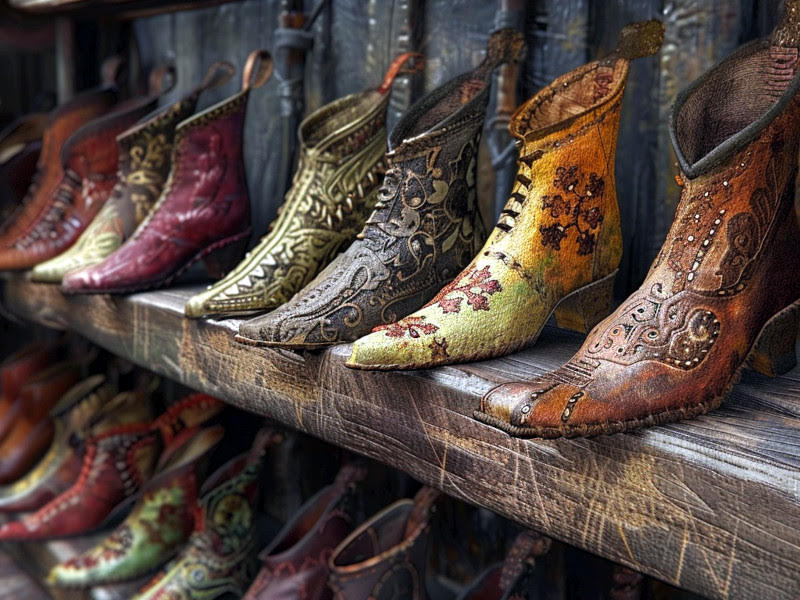
Shoes for Little Sap

by Evan A Davis

It’s cool knowing a little bit about a lot. 10/10, would recommend.

ALSO! If you haven’t heard, got another story out there, this time courtesy of Abyss & Apex Magazine. So check them out and tell them how much you really like “Shoes for Little Sap” by that Evan guy.

Dorian Gray is Awful…(but we might have something [else] in common)

When I first entered the adult world and started taking college classes, I went on a big reading binge of classic literary works because I was leaning into feeling smart and sophisticated. I’m not saying that that worked, but it was a good journey. I now know why ‘Frankenstein’ was terrifically tragic, how ‘Dracula’ was somehow both lamer and way cooler a tale than I’d thought it would be, and that Dorian Gray is a massive douche.

I’m serious. It’s a decade later, and despite the hundreds of stories I’ve taken in since then through the different mediums – books, movies, television, video games, etc – I haven’t found a character I vehemently despise with a greater fervor than I hold for Dorian Gray.

Now, first off, I recognize that it’s a little ridiculous, and I’ve cooled my jets some. Kurt Vonnegut has a great quote about hating fiction:

“Any reviewer who expresses rage and loathing for a novel is preposterous. He or she is like a person who has put on full armor and attacked a hot fudge sundae.”

Well for a while, I bathed my armored boots in the sugary blood of Oscar Wilde’s “The Picture of Dorian Gray,” for the simple reason that the protagonist is an utter shithead.

I rant about it now a lot less often than I used to, but I hold to the opinion that Dorian Gray sucks. That’s probably a good thing, though, since I think he’s supposed to be disliked. If you haven’t ever read or heard of the story, it essential goes that a young nobleman, Dorian Gray, has a portrait painted of him by his meek friend Basil. He soon discovers that the portrait, rather than he, will bear the marks of things that ought weigh heavily on the soul: stress lines in the face, silvered hair, wrinkles that come from a Liar’s Frown, etc. He struggles a bit with whether or not he’ll lead the kind of pure life that will render his portrait forever perfect and unblemished, or live wantonly since the picture will foot whatever ethical tab he runs up.

Spoiler, he opts for the latter option, like a total dick.

*RANT INCOMING*

(I’ll keep it short, but) What I can’t stand about him isn’t that he’s selfish, conceited, arrogant, smug, and manipulative, but that he whines, bitches, and is so spineless too. Whenever he’s in a position of power or leverage, he’s completely mad with whatever little power that may present him, but the moment the tables are turned even slightly, he moans, complains, begs, weeps, and mews. Then, if he gets his leverage back, it’s right back to being an insufferable ass-hat. Like, if you’re going to be a conceited, villainous asshole, at least be sure of yourself in that. At least stick to your damned guns. But to flip flop back and forth between villain and victim is SO gross, and I’m SO happy when he *spoiler* f__kin’ dies at the end.

I forgot where I was going with this, but- oh! Yeah, my car.

Right, trust me, it ties in.

I realized earlier today that my car, Phoebe, is kind of my own portrait. I took great care of her a few years ago. Got her regular washes, got her oil changed ahead of time, maintenance and check-up’s before things had a change to break, and she’s served me well for it.

Then, life got sort of topsy-turvy and difficult, I’ve really had to realign my financial priorities, and that meant Phoebe couldn’t get the same kind of treatment. At the end of the day, with everything I’ve been through and continue to work against, I try to keep my head up, shoulders back, eyes forward, and a bit of smile at the life I’ve got. Almost like you wouldn’t know things have been rough.

But my car looks like total ass now.

I’ve said from the beginning, that as my first car that I’ve had for over a decade now, I’m going to drive it until it dies. She’s in her twilight years, and BOY does she look it. But until lightning strikes her outright dead, I’m going to act as though she intends to roll on.

It’s just created a funny bit of imagery and comparison wherein it’s like I’ve endured some rough stuff, but maybe you wouldn’t know it, and meanwhile my car is bearing all the telltale signs of hardship instead of me.

And I think that’s worth a larf.

Have a good one, everybody.

Ciao.

Today’s Hors-d’oeuvres (#foodforthought)

Happy Tuesday, everybody.

First off, if you’re having trouble (like I did) with the title today, that’s apparently how you spell the little munchies you have before dinner or in between courses (plain speak: “orderves”).

Second, I’m out there husslin’, so for today, you’re at a fancy dinner party. It’s a big ol’ Great Gatsby mansion with a courtyard, a fountain, waiters n’ shit. I’m the guy who walks up holding a tray and a towel over my arm (I assume for some reason) and offers you little worldly food items. Let’s say I have a curly string mustache, too.

I’ve always been a bit of a quote collector and I think we should all be. A few years ago, my girlfriend’s mom gave me one of the best compliments I’ve ever received when I said, “I like to consider wisdom where I find it, no matter the source,” and she replied, “That should be on a pillow or something.”

But that’s what today’s about, a few morsels here and there that resonated, and I’m gonna cross my fingers they do the same with you. Cheers.

#1

“If objects for gratitude and admiration are our desire, do they not present themselves every hour to our eyes? Do we not see a fair creation prepared to receive us the instant we are born – a world furnished to our hands, that cost us nothing? Is it we that light up the sun? Or pour down the rain? Or fill the earth with abundance? Whether we sleep or wake, the vast machinery of the universe goes on.”
-Thomas Paine, The Age of Reason

The Take: I would actually recommend reading all of ‘The Age of Reason’ by Paine- well, actually not. Part 1 is terrific. In (very) short, with Part 1 he basically outlines his views on religion at large, the idea of a Creator, existence, and his own personal form of deism (which I personally find beautiful). The above is a good foot in the door for what the rest of Part 1 is about. It doesn’t capture all of the wonderful ways he illustrates it and further fleshes it out, but it’s a pill if that’s all you want. An even more concise if less flavorful way to express what I think Paine tries to get across here is this: “The world is so much bigger than you and majestic beyond reasonable understanding. That alone is reason enough to appreciate life.”
(The second half, called “Part 2”, is basically a constructed essay-form breakdown on how the stories in the Bible don’t, in his view, conform to logical processes or, as the title goes, reason; and personally, I didn’t find I needed that, but if it’s your bag, go for it.)

#2

“Death by violence, death by cold, death by starvation – these are the normal ends of the stately and beautiful creatures of the wilderness. The sentimentalists who prattle about the peaceful life of nature do not understand its utter mercilessness; although all they would have to do would be to look at the birds in the winter woods, or even at the insects on a cold morning or cold evening. Life is hard and cruel for all lower creatures, and for man also, in what the sentimentalists call a ‘state of nature.'”
-Theodore Roosevelt

The Take: I think I feel good including this one here because I’ve noticed it comes up a lot in my fiction (nothing that’s made its way here yet). I hold that it’s a reasonably good theme to include or just understanding to utilize whether it be in fact, fiction, or real life, because it’s true. Life isn’t easy within civilization sometimes, much less without it. It can be a terrific reminder the next time you think you live in a shithole or boo-hoo about how nothing ever happens in your town. Just watch one episode of “Naked and Afraid” and you’ll realize even that’s wilderness survival set to Easy Mode.
[WOOP WOOP! WARNING! POLITICAL MOMENT AHEAD! 3…2…1…]
And whether you have a stance on hunting, you yourself are a hunter (I’m not), a vegan, vegetarian, or anything else, before you forsake friendships in arguments over these things: hunting isn’t the problem. Is trophy hunting pretty dicky? Yeah, absolutely. But an ethical hunter killing for food that isn’t wasted, while it isn’t utterly natural, it isn’t outside the norm; as it’s an unfortunate fact that that deer or elk wasn’t going to live happily ever after. So the next time you come across a headline that aims to criticize some aspect of hunting, do a liiiittle bit of homework before biting the hook.
[-jets powering down…cooling…cooling…cool-]
If I haven’t lost you yet, on a literary note, taking an understanding that nature in its raw form is exactly what Teddy calls it – “merciless” – and is still beautiful into writing can help bridge some schisms over seemingly conflicting themes. I hope I’ll be able to share some of my own works that attempt the same here one day.

#3

“You’re never gonna get the same things as other people. It’s never gonna be equal. It’s not gonna happen in your life so you just learn that now, okay?
Listen. The only time you should look into your neighbor’s bowl is to make sure that they have enough. You don’t look in your neighbor’s bowl to see if you have as much as them.”

-Louis C.K.

The Take: I think I first encountered this one while scrolling through Facebook yeeeeaaaars back. Originally, in the set he expressed this on, it was while he was discussing being a parent and some of the lessons one dishes out when they find themselves in that position (I also did a super fast google check to make sure he’d been quoted elsewhere too), but it came across as a good bit of personal advice.
It sort of pairs flows from the same perennial, ages-old proverb “Comparison breeds contempt,” and I think it puts a good cap on what we’ve covered. It’s good to expect nothing, yet appreciate everything (saw that on a bumper sticker once, holds up).

Anyway, I think that’s about it. Hope some of this rings with some of y’all.

See ya Thursday (or before, who knows anymore).

PS – I have NEEEEEEWS! Another story of mine, “The Scars of Eliza Gray”, is currently in the works to be featured on the NIGHT LIGHT horror podcast in a few weeks. So stayed tuned, ’cause I’ll be posting updates as I get them and blasting it out there once it’s up! Also keep an eye out and an ear open for the episode where we discuss and give our takes on Jordan Peele’s “Get Out” and “Us”! Yaaaaay!