What Cake Taught Me (+ Story Promo)

A few years ago, I baked a cake for the first time, and I legitimately think it changed who I am as a person. I think I’ve shared this before, but I’ve been ruminating on it again recently. It was maybe January of 2022, my wife and I were lazing the day away watching Try Guys baking challenges on Youtube, and I couldn’t help myself.

“Is it…I don’t know. Is it bad that I kind of think I could do that?” I asked. I had never made a baked good outside of boxed brownie mix to that point in my life.

“You think so, huh?” she asked back, indignation clear in her tone. “I know what I want for my birthday then. I want you to bake me a cake from scratch.”

“You’re sure? Easy-peezy. Consider it done,” I said with a shrug, palms already sweating.

I’d never followed a recipe before in my life, much less attempted the delicate art that was creating a baked good from raw ingredients. And, I’ll be damned, I did it. But not only that, my wife and others also swore under oath that it was actually pretty dang good. Now yes, beginner’s luck played its part of course, but I’ve managed the hat trick of two more birthday cakes in the years since.

But that isn’t the important part. The important take-aways of the experience are two-fold.

The first came when I was making the frosting. I put heavy whipping cream into the stand mixer and watched the attachment whirl away. Cream lapped and splashed while I waited for it to “turn light and fluffy,” but I just wasn’t seeing it. I shot a confused glance over at my wife where she sat, resolutely content to observe and not offer hints. Then the miraculous happened: the stuff in the bowl went from milky liquid to fluffy clouds.

I felt like a god. I felt like I’d harnessed the powers of alchemy and transfiguration itself, granting new form where it hadn’t existed before. The power of creation was at my fingertips, and it felt good.

And that led into the second take-away: I made a thing…by following instructions. Cake was no longer something that existed just in pictures and in stores. I’d taken a bunch of stuff and turned it into a birthday cake by following written shared knowledge. And that meant that could be true of other things. Things you see around you that have been made or built, there’s a strong chance that with the tools and the know-how, you could do the same. (In fact, that reminds me of another recent triumph that I’ll share in greater detail next time.)

Just, I know it can often not feel like it, but just remember that you’re plenty capable, with whatever it is. Baking a cake, fixing up an old car, landing a job, running a marathon – people worse off than you have done bigger, so the math checks out that you can do it too. Different things might take more effort, more investment, more time or willpower than others, but it’s frighteningly simple how many things are within our reach reach as capable people that escape us just because we convince ourselves they’re beyond us.

So get out there and do it, whatever it is.

Oh! And something awesome. Had another story get picked up recently, this time to podcast! So if you’re looking for something to do, or just to go on a journey for a little while, go check out my story “Re-Runs” with Tell Tale TV. It was a funny little story I brainstormed with a friend, and Chris over at TTTV did, I think, an excellent reading of it.

A Jack of All Trades Mindset

I enjoy a lot of hobbies, and sometimes that can feel a little like that means I’m not good at anything. I took up cooking recently because my wife and I were gifted a cast iron skillet that I fell in love with. I started by getting a couple of cookbooks, trying out different recipes, then going off-book and coming up with my own, now slightly-informed concoctions. And it’s been going well. I know more herbs and techniques now than ever before in my life, and I love the creative process of it all. Not everything I churn out is menu-worthy, but some stuff is.

And as with any activity, trade, or artform, there’s always more to learn, and there’s more going on under the hood than appears on the surface. That’s true when you learn anything, and it’s part of what can make everything fascinating. Once you realize everything’s that way – there’s a starting point, a process, progress, and development – anything new you try is at the same time more daunting and more accessible than it was at first glance.

It was that way with rock climbing and running, when I did those back in the day; I’m a big Magic: the Gathering player and it was that way learning the in’s and out’s of the game; same way, albeit simpler, for my recent backgammon obsession; similar to learning how to bend notes and operate your tongue playing the harmonica; and it was the same when learning how to shoot a bow back in the day, learning how to stand, how to use your shoulders and set your hips, how to release without plucking, how to breathe, etc.

Frankly, I’m kinda good at a number of things, because I’ve pursued them with interest. But the downside there is feeling like I also kinda suck at everything, since in each of those avenues mentioned above, there are loads of people who are better at them than me.

I’m better now at cooking than I was a few months ago, and it’s been real nice to impress friends and family with my newly acquired know-how, but next to any truly savvy cook, I’m a total chump. I’m much better than your average person walking the street at using a bow and arrow or playing Magic, but would be a slack-fingered halfwit on the line or at the table next to anyone who trains and/or goes to tournaments. I earned my first ever backgammon against a good friend the other week, but your average club member would probably use me to mop their floors.

But – and this is a big ol’ nice jiggly “but” – being the best at your hobbies shouldn’t be the point.

Kurt Vonnegut had a good story once about being sent a letter from a fan, and while I’m foggy on the details, I do remember the advice he had for said fan: Go home and write a poem. Make it the worst, most stupid and dumb-sounding poem that’s ever existed if you have to, then rip it up into tiny pieces and scatter them. The point isn’t in having the poem to show off, but in having written it. Art isn’t supposed to be done for a sale (funnily enough being said at that point by a profoundly successful professional author – an irony he himself points out). The whole point of art is to do it and enrich yourself by doing it. So write a shitty poem, sing a song that sucks, make a clay pot that’s ugly as sin – just do it, though.

I’ve raved before about how great a lesson the Pixar movie Inside Out had to give out, and up there next to it is the movie Soul. If you haven’t seen it yet, skip to the next paragraph, starting…now, but in essence the lesson of that movie is that a single-minded pursuit is the best way to miss out on life. The main character is so wrapped up in his romantic pursuit of being a jazz musician, he not only misses out on the joys of his daily life and he’s shocked to see the realities of that life don’t fit his ideal once he becomes one. It takes a cartoon cat to show him that life is about the small, loveable mundanities, the variety. No one slacks him for having a dream, it’s just that there’s more to life than that.

Now, there is a certain nobility to giving up a varied life experience in order to power-level one particular skill, to eschew other interests and pleasures in pursuit of mastery of one specialized thing. The star athlete that devotes every waking thought and action toward championship of their sport, the craftsman that locks themselves away in pursuit of perfection of their art, the businessperson that is single-mindedly focused on whatever they heck they’re doing – there is a certain degree of honor due to that lifestyle. But I’ve been stuck with the following quote ever since I came across it, spoken by Lazarus Long in “Time Enough for Love” by Robert Heinlein: “A human being should be able to change a diaper, plan an invasion, butcher a hog, conn a ship, design a building, write a sonnet, balance accounts, build a wall, set a bone, comfort the dying, take orders, give orders, cooperate, act alone, solve equations, analyze a new problem, pitch manure, program a computer, cook a tasty meal, fight efficiently, die gallantly. Specialization is for insects.”

So in conclusion, does a part of me lament not being the best at whatever I set myself to? Yes, a little bit. Does the rest of think that’s a pretty stupid thought? Absolutely. I think it’s kind of awesome to celebrate the talents, displays of skill, and ingenuity of our fellow peoples. We, individually, can’t do everything, we never will, and it’s a load off to realize that. Should we strive to be good at what we do? Sure, in the name of accomplishment and enjoying whatever thing is in question, but not to the detriment of that enjoyment.

Shoes for Little Sap

by Evan A Davis

It’s cool knowing a little bit about a lot. 10/10, would recommend.

ALSO! If you haven’t heard, got another story out there, this time courtesy of Abyss & Apex Magazine. So check them out and tell them how much you really like “Shoes for Little Sap” by that Evan guy.

Writing is just a Gambler’s Fallacy (+ News)

I’m gonna do one of those things I dislike, which is writing about writing. It always feels…I don’t know, almost masturbatory in a way, even if it’s self-deprecating. Like in movies or shows, or any of Stephen King’s short fiction where the protagonist is a writer, it strikes me as so obvious that I’m just consuming somebody else’s self-insert fantasy.

Which, I mean, what else am I subjecting your potential eyeballs to with this rant, really?

My point is that rejection letters are a part of this game. They go along with that saying of how success is 1% reward and 99% work that others don’t see. Speaking of 1%, actually, a lot of places I submit work to have an average acceptance rate of 1% or less. I take that to mean that I can expect 99 rejections for every pickup I get, or to put it another way, I have to try 100 times for each success I can expect. Now, I’ve beaten the odds on that a fair bit, but rejections start to get a little brutal when they pile up without a win somewhere in the mix.

But there are things that keep me at the table.

Like when a rejection is personalized. Most are form letters, templates, fine. But when one is personalized to say “Hey Evan, I liked your story. Here’s what it did well, here’s what missed, and we almost accepted it, but have to pass this time. I know it would have been a good pay day with great distribution and you were this close, but nah. Better luck next time. Kisses.”

Boof. Ouch. I think back to Loki’s words in the first Avengers movie, talking to Nick Fury: “It burns you, doesn’t it? To have come so close, but then be reminded of what real power is?” I don’t know what “real power” is in this analogy, but shit, yes, ouch.

That said, my brain can’t help but focus on the huge other side to all that: So…you’re sayin’ there’s a chance?

The truth is that there are a million reasons why work can get rejected. Loosely paraphrasing an essay I read from an outlet, Dream Forge, on the subject: Your story could have been funny and a good fit, but the editor who read it just didn’t feel like funny that day. Could have been the slush reader who happened across your story in the pile just went through a break up and took it out on you. Your story about kickass ninja vampires on the moon could actually be a perfect fit, but it just so happened that the story just before yours on the stack was also about kickass ninja vampires on the moon, and they accepted that one because they saw it first.

So submitting fiction is a lot like playing the lottery, if you don’t have an agent or a hook-up (and maybe even then, I don’t know). And knowing that I got super close to a win makes it feel like I’m about to, you know, just like the logic that the steretypical gambler that uses to lose their house at a blackjack table.

And there’s also the rush to consider. Either when an acceptance comes through, or even just when a new prospect or idea surfaces. I get a lot of my news about available submission windows through newsletter services like Freedom With Writing and Authors Publish, and most times when I send out a bevvy of submissions, it’s like sending a bunch of soldiers out on a suicide mission. I know most of those aren’t coming back.

But you have to try.

And when a fresh wave of new submission opportunities pops up in my email, scanning through them to look for anything promising…ooo, the rush of potential is what keeps me addicted to trying. And in the background, I try to always have something cooking, some new grist for the mill.

And sometimes those come through.

My story, “Shoes for Little Sap” is coming out with Abyss & Apex Magazine on the 1st. It’s cozy, quick, and has a special place with me, both being a former NYC Midnight piece of mine and something I read to my mom when she was in hospital some years back and got her to smile. (I remember thinking then and there that the story had served its purpose, and I’d be okay if it never again saw the light of day after that. Of course, pretty thrilled to have it be published, but still, you get my meaning.) So yeah, check it out! I’ll be bugging folks about it on here more between now and then, but mark your calendar anyway.

The Meaning of Life has Four Legs

I’m willing to bet you read that and thought, “Dog. It’s a dog. He’s gonna say dog.”

Or maybe you’re more of a cat person. Or something weird and adorable like a capybara.

After announcing my blissful marriage a couple of weeks ago, I’d expected to follow that up with a travel blog-style round up of the adventures that were our honeymoon – which were awesome. But in the couple of weeks since, telling those stories to friends and family is all I have been freaking doing. And I have more of it ahead of me. Don’t get me wrong, I have loved recounting the tale and reliving it each time with the retellings; and in fact, that’s sort of our point here today. But I’m going to take a breath and enjoy talking/writing about something else for a second while I recharge.

In any case, with regard to all the above hypothetical answers I’m positing then taking upon myself to shoot down: No. You have a guess of your own? Give up?

It’s a table. The meaning of life is a table.

When I was in my early twenties, I was taking an English class, and as an icebreaker the professor had us pick a question for the rest of the class to answer. It was a good way to get a feel for personalities, both in the asking and in the answers that followed. Some were pretty creative, too, and others ran a bit of the usual gamut, one such being: “What is the meaning of life?”

Well’p, the young lady who’d gone and asked that had messed up, because I was a pretentious 20-something who’d done some “deep thinking” and had an answer for her. Now, I denigrate younger me a little, but I feel now still as I answered then: Life doesn’t have any inherent meaning, and the question itself assumes too much. It assumes there is a meaning to this life, it assumes there’s only a singular one, and it implies (at least to me) a bit of universality to it, like it’s a one-size-fits-all.

Now, ironically, around that same time I’d come across someone else’s definition of their meaning of life, which I’ve gone onto adopt as my own, and that is a table.

A table where folk sit together and swap stories – about their day, about crazy things they’ve done, confessions, adventures, complete fiction! – is the meaning of this life, in the best way. A table, laden with food, drink, cards, etc, shared with loved ones or new friends, is a place that brings together the things that matter most in this human experience. When I imagine that, I imagine a safe, warm place together with people who matter to me.

And the thing about stories like that is that the best ones come from experiences you gather from getting out there and living life. I have legitimately made decisions, gone and done adventurous, memorable things I might not have otherwise, and vastly more for the better than for the worse, off of the motivation that “this will be really cool to tell my friends at a dinner party.” With the prize of that story awaiting you, it can get you to go and live your freaking life, which is the whole point!

Tables are magical things. They represent togetherness, shared times, a motivation to go on adventures and a safe place to come back to when those adventures are had. And to counter the title, not every table needs to have four legs. Sometimes it’s a campfire, or the cab of a car during a road trip or move, or even a journal or postcard.

And I think I came just shy of a proper rant. So we done good today.

So yeah. Get out there, do stuff, try new things, surprise yourself, then tell people about it.

“You Are Absolved, My Son.”

You know the phrase “you get more with honey than with vinegar”?

I’m willing to bet you do, but I recently did a workplace poll on who had or hadn’t heard the phrase “Don’t look a gift horse in the mouth” and was astounded by how many people hadn’t.

So, however extra (as The Kids are wont to say these days) it may be, it basically means that you’ll garner a more positive attitude and curry more favor with folks if you’re sweet and kind than if you’re kind of a mean, smarmy douche.

A few weeks ago, I accompanied Ms. Amanda (#fiance) to a colleague’s retirement party, and this thing was a bash. There were probably two hundred people at what was basically a hilltop mansion, enough food to feed a zoo, and a live band. Like I said, a bash. Maybe a bash and a half. And all of it for a retiring elementary school teacher.

This dude was be-love-ed.

Funnily enough, since I went to this thing expecting to obviously be a plus-one that was a fish woefully out of water (which is, uh, something you say when you feel out of place, #extra), I knew a number of people who were there. I guess if you live in a city long enough, the world can only really get so big. One of them was actually the host!

Here’s to you, Chuck. Helluva place you have, and it was good to see you.

Another was one of the band members. Standing tall and proud in his cowboy hat and blue button-up playing the stand-up bass was my old high school physics teacher, Mr. Davis. First, the wash of nostalgia and familiarity hit me, but second was the dawning realization that this was going to be a day of reckoning.

Back-story time.

See, the last time I saw Mr. Davis, I was a sixteen-year-old rapscallion and troublemaker. Like I said, he taught me physics in high school, and during the segment of the year we were studying sound waves, he comes into class with a shiny set of tuning forks – they’re the two-prong things you hit on something and they go “Biiiiiiiiinnnnng!” They have practical uses, but that was the extent of my interest in them: hit thing, go bing.

So at the end of class that day, I put one of them in my backpack. I nicked it. Absconded with it. Freakin’ stole it.

I’m ashamed of it now, but at the time I fancied myself some kind of cunning rogue.

At the beginning of class the next day, Mr. Davis comes into the class room, and you can tell he’s in a somber mood. Like, really sad. After the morning announcements over the PA, he addresses us:

“Hey guys. I, uh, I noticed that in the back there, some of my tuning forks are missing. (So I wasn’t the only one!!) And I, uh, y’know, the school didn’t pay for those, I did. With my own money, and I did it because I thought they would be a fun thing for us to get to use and learn with and- ah, anyway. Hey so, if I could just get those back, I’d appreciate it. Nobody’s in trouble or anything. I could even watch you put them back. I’m not gonna get mad or say anything, I’d just, ah, I’d like my things back because…well, anyway. Yeah. Please. Thank you. Ahem, anyway, today we’re going to cover…”

Y’all. I was heartbroken over what I’d done. I couldn’t possibly have focused that day. I was so wracked with shame at having stolen this man’s property. I was a dirt bag, and I remember (stupidly) telling a friend later that I’d have felt justified if only he’d come in with fire and brimstone. But he didn’t. He spoke softly, honestly, and sadly. Christ…

I put that tuning fork back in my backpack the second that I got home that day.

The next day, when I returned it, oooooo, the glares that I got from my classmates – and I deserved them. I did it while he was out of the room during announcements, but my peers did, and his plea had tugged at their heartstrings like it had mine.

And I carried around that guilt for thirteen years, until this retirement party.

I see that Mr. Davis is in the band, and eventually the musicians go on break to get some food. As they do, I get up from my seat and follow him, calling “Hey! Matt!” (I get to call him that because I’m an adult now.) He looks back at me with an eyebrow raised, but smiles too. We shake hands, he says he’s headed to the food tables, and I say I’ll join him. On our way he asks, sort of hesitantly, “So, um, how do I know you?”

I laugh and tell him that he taught me physics a lifetime ago, and we chit chat a couple of seconds over how life has gone and where it’s taken us, but them I tell him that, actually, I have a confession. And I tell him about how I stole one of his tuning forks, but what his plea did to my conscience, and how I returned it and all the rest.

No joke, in between scoops of potato salad, he stops, faces me, and performs the sign of the Cross over me saying, “You are absolved, my son,” and laughs.

I laugh with him, but then rightly tell him, “Hey man, this might have been a joke to you, but I legitimately feel lighter all of a sudden. I’ve been carrying that shit around with me for over thirteen years.”

And it was true! Like, there was a crick in my neck that’s gone now, I sit and stand a little taller with a straighter back now. I freakin’ feel like my conscience, at last, has been cleared.

By the end of the night we bumped into one another again, brought it back up, joked, and he friggin’ hugged me. It feels good, closing the loop on a thirteen-year quest for redemption you’re on for stealing from an honest man. 10/10, would recommend.

But….except- just, don’t steal.

#PSA

See you guys.

Like What You Like, a Pirate Taught me That

I don’t know why I was thinking of this earlier today, but I’m glad I was. And don’t get ahead of me thinking there was some clutch moment where that life lesson of self-acceptance saved the day. Nope, just a mundane day at work where the thought caught me and it made me smile. In fact, with this lengthy preamble, I’m already treating this nugget of life advice like it’s some unknowable secret I’ve mastered that you probably haven’t figured out yet. Psh.

It was a scholastic book faire, circa 2006. I’m in middle school, and I should preface (some more) that I went to a tiny, tiny Lutheran private school – and yes, it was about as cool as that sounds. It wasn’t because of any sort of privileged position, either. Just that it was right by our house and my mom wanted to do her best as a parent. In truth, I would now as I would have then traded in my time for the same years spent at a public school where I could have begun cultivating meaningful friendships sooner.

At the Lutheran school I attended, it was Kindergarten through 8th Grade with around 120 kids – total. TOTAL. That meant that if you didn’t fit in with your 15 or so classmates, it was tough nuts, because you were stuck with those same 15 kids your entire time there.

I did not fit in with my classmates.

By my memory, their interests largely ranged between baseball, horror movies, Top-40 pop music, none of which interested me. Baseball? Not a sports guy. Horror movies? I’ll take a comedy, thank you. Pop music? I like Metallica. And I played D&D and read manga, things that only nowadays are sniffing “cool” territory (except you, manga, you’re still a pariah from what I hear).

So yeah, book faire.

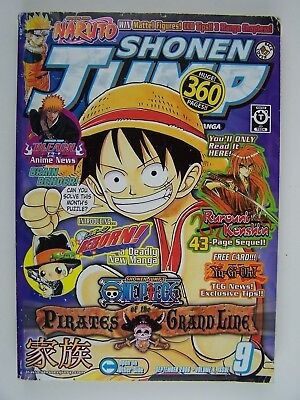
We peruse the pencils, browse the books, and excavate the piles of colorful erasers looking for favorites, and exit into the gymnasium. Two other boys, we’ll call them Jimmy and Timmy, are poring over their haul, namely a couple of sports magazines. They ask what I came out with, and I show them: an issue of Shonen Jump with Monkey D. Luffy on the cover.

For those not in The Know, One Piece was a cartoony pirate adventure, and that grinning doof in the middle is Luffy, the happy-go-lucky pirate captain protagonist

I still remember the looks on their faces and the sound of them laughing at me. And especially as an eleven-year-old, I’d been defensive and embarrassed before. I knew the reflex to hide it in my backpack and say, “Yeah, no, it’s kinda dumb. It’s for my-” blah blah blah.

But today was different.

I don’t know where it came from or why, but a muse of some kind came out of the ether, broke into my thoughts, and said, “You know what? No. Fuck these guys. One Piece is cool, and I like this.”

It wasn’t anger behind the thought, either, just complete and total dismissal. Their thoughts and opinions on my interests could NOT bother me one bit. And I credit Luffy’s dorky grin, now that I think back on it. He felt like backup, telling me it was totally alright to enjoy the things I found enjoyable, other people’s thoughts on the matter be damned.

And good goddamn am I ever grateful that lesson occurred to me as a kid. I think we all know someone who – or maybe ourselves struggle with this – lets the opinions of others dictate their interests and pastimes.

Bottom line is this: Like what you like, be secure in your opinions because your the one who they’re for. Try new things, sure. And if someone wants to disparage your interests, like your an adult who likes video games and cartoons or someone in a biker gang that enjoys crochet, just realize it’s the limitation of that person’s worldview. Take pleasure in the things you like.

Or else, hell, what else are we even here for?

Ciao for now.

Icebreakers

Y’know, I didn’t plan the title to be quite this appropriate, but after a quiet hiatus of two-ish months, it’s actually kind of fitting. I think of good icebreakers as fun little questions, or questions you ask “because why not?” And really good ones both break the ice and tell you something about the person you’re asking them of while they commence with said breaking of ice. Not totally sure why, but I’ve caught myself asking these kinds of things of my coworkers a lot more often lately – not because dialogue with them is awkward or anything, quite the opposite; I think it’s just because they’re sort of fun.

And why make it more complicated than that?

So without further adieu, Icebreaker #1: “If you were going to become an animal, what animal would you become and why?”

My favorite part to that one is actually all of the qualifying questions that usually follow it. “Like, at will, or forever moving forward?” “Right now, or is going to happen in a week or something?” “Will I keep my human intelligence, or just- poof! You’re a jaguar now?” And to answer those, the house rules we’ve been running with have essentially been “No, it isn’t an at-will kind of thing. It’s a permanent change. No, you don’t get a week to prep for it, it just happens here as soon as you answer – go with your gut. Yes, you keep your human intelligence.”

Obviously my second-favorite part are the answers themselves and their justification. That jaguar one was a real answer, and the given reason was that he wanted to be a house cat, but if he gets to keep his human intelligence, then a jaguar is like that but a bit more badass. Plus, if you’re going to answer the question and introduce a scenario wherein you’re now suddenly a giant cat, there are some follow-up questions that beg answers: How do you tell your family? Do you tell your family? Where do you set up your new home if so, or if not? If you’re a predator now, then what/where/how do you hunt?

The possibilities are ENDLESS!

Personally, I chose becoming a hedgehog; but truthfully, that was just a gut-reaction and I don’t think it was really a smart choice. I’d become super cute, sure, but I think, like, anything that lives outdoors can and would happily eat me. Or at least brutalize me.

Lookin’ at you, stray cats.

The other classic is “If you could have a super power, which one would you have and why?”

This one everybody has heard and/or given an answer to. Mine is pretty easy: telekinesis. It’s subtle enough that most times nobody ever has to know you can do it, but it can also get powerful enough that you’re a goddamn Jedi, plus there’s plenty of room for creativity with it. But you also run the gambit of Usual Suspects:

Invisibility – Ugh, says everyone. Though, credit where it’s due, one of my friends did say that she’d use it defensively instead of to be a creep. She’d just go invisible when she didn’t want people to talk to her, and I can respect that.

Flight – Sure, but how, wings or thought? And how fast? Either way, you’re going to need goggles or something, plus it’s going to get cold. That and a slew of other problems come along with choosing to fly. ALSO, it’s one of those powers where if you suddenly stop using it while you’re using it – you die.

Teleportation – See this one’s also problematic. Is it short-distance, Nightcrawler style? Or is it like in Jumper where you can just pop across the planet? And do you think you can focus enough and picture your destination clearly enough, honestly, to be able to not end up glitching into a wall somewhere?

This last one is a little niche, but I still think it can be pretty telling of the person who answers it: “What’s your favorite D&D class, and why?”

Naturally, this will be a little limited to tabletop gamers being the only ones who can give you informed answers, but we are a growing breed, and it can be a chance to introduce newbies. Also, it can be a good way to be surprised. One friend who I was sure would swing either for ‘stalwart paladin’ or ‘playful rogue’ hit me out of left field with “I think being a druid is cool. Taming beasts and kicking ass as a bear, or something. Rad.”

Rad indeed, Robert. Rad indeed.

Personally, my favorite class is and always will be the Ranger, even if they get a little screwed over by Wizards of the Coast in the stats department. But even if their class features receive lesser support than others, it isn’t really what they can do that makes Rangers the best, it’s…well, what they are. They are so freakin’ versatile – ranged support, melee damage dealers, exploration/expedition heads, utility spellcasting, animal companions if you lean that way, etc. I get that this statement is true for plenty of classes, but I feel it in my heart the most for the Ranger: you can build it so many different ways. System-wise, Pathfinder may have done it the best, with the inclusion of “Urban” environments as a possible Favored Terrain. One of my favorite Ranger builds was making an urban explorer that was a treasure hunter, with Constructs as his favored enemy.

Taking silver is sort of a two-way tie between Bards and Monks, but that’s a separate discussion.

Anyway, so, yeah.

High School Age Catharsis

It might be the encroaching presence of my thirtieth birthday looming over the distant horizon a year-and-change hence, but I’ve been finding myself strangely reminiscing over my teen years a bit more lately. And that comes in a few forms. Basking in warm memories, obviously. Laughing at the folly of my youth, even more obviously. But also the growing that was done in those years. Namely, the first time I had an experience that gave me context for the idea of “catharsis.”

I’ve never made any bones about how this, being my own tiny slice of the internet, is basically a glorified little public diary. Don’t get me wrong – I’m glad as heck to have you here and any involvement/feedback I get on here is received like a warm batch of cuddles; but it remains just that, a place for me to stream my consciousness a little, workshop some things, limber up some mental muscles at times, and post stories that I’m positive will never see the (Say it with me, now) Light of Day otherwise.

What it boils down to is that writing’s healthy, I find. It helps you expunge some of the plaque that builds up in your machinery, and offers a net to catch pesky wandering thoughts, granting the peace of mind that you have them now, no longer risking them to forgetfulness. It’s cathartic. And the first time I can remember discovering that for myself was when I was seventeen.

Brief back story: I went to religious private schools off and on growing up. Catholic one year, then most of my middle school years attending a little Lutheran school. That meant a lot of religious inundation, and a Judeo-Christian lens for most existential explanations growing up. That meant it felt, while freeing, a bit culture-shocky when I attended public high school and made friends who didn’t think that way. Also meant I was in for a bit of a metamorphosis as I encountered more and more new ideas that challenged the worldview established growing up.

The tipping point, funnily enough, was reading “A Dirty Job” by Christopher Moore. In summary, it’s about an average Joe that accidentally becomes responsible for ferrying souls, essentially, from one life to the next. It painted something reminiscent of a case for reincarnation, and had a very humanizing and personal (while hilarious) prism to it. But it stoked a bunch of questions I’d felt building the last couple of years.

Maybe…God…wasn’t. Wait, what? Maybe…this – this being life – isn’t structured as neatly as I thought. But if that hasn’t been right, then- but if not, then…what? Wait, what?

With the challenged worldview, I wasn’t given a thoroughly convincing new answer to replace the firm ones I’d known until then, only questions.

I didn’t call it this then, but it was a bit of a spiritual crisis. I felt a little cast adrift all of a sudden. And at seventeen, with proper adulthood and college around the corner, it came at a hell of a time. I had questions. A LOT of questions. Plus thoughts, theories, models trying to draw themselves in my brain, what felt like a forced but unsubstantiated new way to look at the world, and a lot else all competing for rank in my mind.

It. Drove. Me. Nuts.

For any other Avatar: The Last Airbender fans (which you should be, because it’s awesome), looking back on this is what gives me a greater appreciation for Zuko’s arc; specifically when he decides to help Aang rather than hunt him, and that identity/spiritual warring sends him into fever-stricken convulsions.

But while it’s tough, I think it’s an objectively beautiful part of the human experience.

Anyway, I felt insane for the better part of a week, at least. Stopped hanging out with friends, f**ked off my homework, the whole nine. Until one day, during my free fifth period, I went to the library and wrote it all down. I scratched out every thought that plagued me, every unanswerable question, every idea and model until my hand cramped. Then at the end of it, I set my pen down and instantly felt better, like someone had thrown a valve and the mental pressure just evaporated. I’d taken all the chaotic thoughts and questions, captured them, and sealed them in ink on paper.
And just, oh boy, I recommend it as a matter of good practice to anyone who finds or has found themselves feeling in similar straits.

Take care of yourself, you’s guys.

Thoughts on Pain (from a Wizard)

I’ve been binging paperbacks hard this year, and a fair amount of those have been The Dresden Files series. If you’re unfamiliar, it’s a series of novels by Jim Butcher centering around a private investigator in Chicago who’s a wizard. Or it might be more appropriate to say he’s a wizard who works as a private investigator. Either way, it’s great. I had friends recommending the series to me for years until one of them just bought me the first five (there are seventeen so far) and I’ve been cramming them almost constantly ever since.

They’re fun reads.

But you ever have one of those moments with a book that sits you down? That can either mean sits you down on your ass because it took you off your metaphorical feet, or it could mean that it sits you down, puts a hand on your shoulder, and has a talk with you. It’s one of those moments where, for a brief minute, you set aside the story the book is telling you and audibly thank the author by their first name like you’re on that kind of basis with them.

This was one of those.

It was a perspective on life that I realized I’m going to be loosely quoting, paraphrasing, and otherwise referencing in deep talks with others for a while, if not the rest of my days on this earth. And I won’t lie, I had expected something like that to come out of ‘The Art of War,’ or ‘The Book of Five Rings,’ or ‘The Alchemist’ (which is also good), or something. Not necessarily a novel about wizards, zombies, vampires, angels, warlocks, and all the rest.

I’m going to put the excerpt here, in all its glory. It’s out of the ninth book in the series, ‘White Night,’ pg. 307-309 if you nab the edition published by ROC. (I don’t know if there are other “editions,” it just sounded fancier to say that way.)

“The wisdom, maybe, was still in process, as evidenced by her choice of first lovers, but even as an adult, I was hardly in a position to cast stones, as evidenced by my pretty much everything.

What we hadn’t known about, back then, was pain.

Sure, we’d faced some things as children that a lot of kids don’t. Sure, Justin had qualified for his Junior de Sade badge in his teaching methods for dealing with pain. We still hadn’t learned, though, that growing up is all about getting hurt. And then getting over it. You hurt. You recover. You move on. Odds are pretty good you’re just going to get hurt again. But each time, you learn something.

Each time, you come out of it a little stronger, and at some point you realize that there are more flavors of pain than coffee. There’s the little empty pain of leaving something behind – graduating, taking the next step forward, walking out of something familiar and safe into the unknown. There’s the big, whirling pain of life upending all of your plans and expectations. There’s the sharp little pains of failure, and the more obscure aches of successes that didn’t give you what you thought they would. There are the vicious, stabbing pains of hopes being torn up. The sweet little pains of finding others, giving them your love, and taking joy in their life as they grow and learn. There’s the steady pain of empathy that you shrug off so you can stand beside a wounded friend and help them bear their burdens.

And if you’re very, very lucky, there are the very few blazing hot little pains you feel when you realize that you are standing in a moment of utter perfection, an instant of triumph, or happiness, or mirth which at the same time cannot possibly last – and yet will remain with you for life.

Everyone is down on pain, because they forget something important about it: Pain is for the living. Only the dead don’t feel it.

Pain is a part of life. Sometimes it’s a big part, and sometimes it isn’t, but either way, it’s part of the big puzzle, the deep music, the great game. Pain does two things: It teaches you, tells you that you’re alive. Then it passes away and leaves you changed. It leaves you wiser, sometimes. Sometimes it leaves you stronger. Either way, pain leaves its mark, and everything important that will ever happen to you in life is going to involve it in one degree or another.”

God. Damn.

Thanks, Jim.

Little Red Rock

One of the hardest things to do as a writer, it seems, is to handle the crippling loneliness that constantly threatens to drown you like the black waters of a high tide you don’t notice until their chill is constricting your chest and-

Ahem.

What I meant was, one of the hardest things to do as a writer, it seems, it to do just that: Write. Finding a place to start. Staring at a blank page. Making the dream theater in the your brain real on the page. Like, it doesn’t seem that hard, but there’s some strange paralytic element to the act of…just doing. It’s a skill that takes time to cultivate, and the bummer is that there’s no real trick to it. The way to do it is to just friggin’ do it; and the more you do it, the more momentum you build and the easier it gets.

A byproduct of that is you wind up writing a lot of crap. And not in the sense of how much content you create, though that’s true to. I mean a lot of the ideas you have, flesh out, and bring to life through effort and time will inevitably suck. But what’s cool is that the more you do it, the more crap you generate, the more gems in the rough you come across, and the more stuff you have to look back on and go, “Hahaha, wow. Once upon a time, I thought that was a good idea. Geez.”

Like this one.

Technically, the story that follows was the result of a drunken New Year’s Eve a couple of years ago. There was a deadline approaching for a magazine that held a call for cheesey, sci-fi/horror taking place in space. This totally fit the bill, but…it’s…just not real good. I’ve kept it in my folder for manuscripts I’ll pitch to open calls for stories and sling it at anyone asking for something like that: cheap horror set in space, but I definitely recognize that I rushed the story to a conclusion I thought was funny and then have never since bothered to edit it or fix.

So, if you have ten minutes you’re looking to burn on a piece of bad sci-fi/horror fiction that ends in a badly told “Tell me about the rabbits, Lenny” joke, I present…

Little Red Rock

Mars.

A tiny, copper light among the stars that inspired priests, storytellers, and astronomers for millennia. Does it have water? Did it have water? Or little green men with ray guns, flying saucers, and big heads?

The first Mars rovers and probes sent back images of bare rocky expanses. They were boring but at the same time so exciting because they reminded us that Mars was a place, a very real and reachable place. These boring pictures were lauded as an awesome expanse of the frontier. They kept news cycles around the globe busy for about two weeks before the latest and greatest political scandal stole back the headlines. The pictures almost fell into comfortable obscurity when the rover sent back new images, interesting ones, the ones the world was really waiting for. December 18th, 2021, the Mars rover sent back images of a large, angular structure, embedded into one of the planet’s innumerable rocky, red cliffs.

Right on time for Christmas.

In a brand new, cooperative Space Race, efforts mounted to get boots on the red planet and, just four incredibly short years later, the Ares mission launched. On board was a team of six international specialists. Head of Linguistics and Communications Anthony Gomez, Chief Technical Officer Tanisha Roberts, and Lieutenant Colonel Leonard Thompson made up the team’s military arm. Chief Geologist Makoto Tanaka, Chief Medical Officer Victor Andrade, and Chief Biologist Sonya Manesh comprised its civilian science wing. Together, they represented both the world’s best and brightest as well as Earth’s attempt at a potential diplomatic contact with an extraterrestrial.

Initial reports from the Ares mission began as they would go on: short and usually upsetting.

Six months into space flight, Officer Andrade succumbed to an illness, allegedly resulting from a previously undisclosed or unknown serious food allergy to peanuts. Then, stemming from a course deviation and near miss with Phobos, a miscalculation put the shuttle’s landing off its mark by some forty-eight kilometers. To follow, a hard landing left Officer Gomez with injuries to his leg and spine. He was stable, but after it was deemed necessary to take the shuttle’s Ranger to the site of the structure, it was voted among the crew that Gomez was to stay behind.

The Ranger departed the shuttle January 23rd, 2027, at 16:00 Earth’s time. Its last transmission was received at 17:43 of the same day as it approached the structure. The crew described a mountainous, angular facility with strange runic markings about much of the face of its walls and thick cables which were woven into the rock like roots from a tree. The transmission was broadcast live on Earth to a global audience which hung greedily on every detail and set thousands of historians immediately to work on their dissertations. The excitement peaked as the transmission described an even stranger sight.

“There’s…what, it looks like a door,” said Officer Roberts’ voice over the radio. “It’s opening! The door to the facility is opening and- what in the? It looks…there’s someone there. Two legs, arms, my God! It looks human- well, humanoid. But blue, like it’s made of light. A hologram of some kind maybe? It looks like it’s…waving to us? Yes! It’s greeting us! Contact, I repeat, we have made contact! Holy crap, this is incredible! Approaching the door now!”

With no word since then, Officer Gomez and the rest of the world were left to wonder what it was the rest of the crew of the Ares mission had discovered inside.

*

“Duck! Duck goddammit!” Thompson slammed his hands against the viewing glass. “Above you!”

“Now on your left, Sonya!” Tanaka shouted. “Fuck, Roberts, can’t you shut this thing down?”

“I’m trying! He’s locked me out!” Tanisha pushed a button and her voice rang out of a speaker in the chamber they were all watching. “You have one more wave, Sonya. Get ready.”

Things were not going well.

On the other side of the glass where the three crew member stood, Sonya Manesh gave a weak thumb’s up. She was in a blank room with featureless chrome walls. She was dressed in an orange and white jumpsuit, drawing heavy, gasping breaths, and her hair stuck to her forehead with sweat. She had a deep cut on her left arm and various singe marks on her other arm and legs.

“Final commencement agility testing,” came a voice with a thick Russian accent over the speaker. “Will now begin. I am wishing you good luck.”

“Fuck, come on Kestrel! That’s enough!” Thompson shouted.

“But the testing must be beginning soon. These are rules.”

“Can’t you just rip out the wires or something?” Tanaka whispered to Roberts, who was frantically searching the console in front of them.

“You want me to just start ripping things out?” she hoarsely whispered back. “We barely understand what this place is, let alone how it was built. I do that, who knows what would happen?”

“I do,” came the Russian voice over the speaker again. “Also because I am hearing you. Your whisper is very bad.”

“How about instead of these tests, you just let us-”

“Anyway, testing starts now!”

A red light on the wall beside them turned green. Inside the room, dozens of small nodes began to emerge from hidden creases in the walls. A light hum filled the chamber as beams of light shot across the room and connected between the nodes, forming something of a fractured grid of lasers. Sonya spun around, wildly taking note of the several new deadly lines of burning plasma. She began to panic.

“Guys? Guys, there are way too many! This is so many more than last time!” she cried.

“Keep your head on straight,” Thompson shouted into the microphone on the console. “That’s an order!”

“You can do this, Sonya. Just stay focused,” Tanaka followed.

The nodes began to move slowly across the walls, shifting the lines of light with them. Sonya ducked out of the way of one, dove off to the side of another, and flattened herself against the ground to avoid a net of more. Seeing another line descending on her, she rolled out of the way, and then narrowly missed another beam that slid under her with a quick hop.

“She’s doing okay,” Roberts breathed to herself, her thumb off the microphone’s button

“She isn’t out of this yet,” warned Thompson. “But she’s doing alright.”

“See?” A blue figure statically phased into being behind them. It appeared to wear a jumpsuit and an ushanka hat with a hammer and sickle symbol just above the forehead. Its arms were crossed and it wore an exaggerated smirk on its flickering face. “It would not be test if there was no winning. You were all worried.”

“It shouldn’t be a test at all, you son-of-a-bitch,” Tanaka shouted.

Sonya rolled out of the way of another beam, but caught her foot on yet another. It cleanly sliced off a portion of her shoe and she howled, fell to the ground, and held her foot. In her moment of stillness, a third beam twisted in her direction. She threw herself out of its way, but too slowly. It passed through the peak of her bent knee and after a stunned moment she let out an agonizing scream.

“Turn this off, now!” Thompson shouted at Kestrel. “Do it or I swear to God I will tear this place apart. Discoveries and exploration be damned, I will hunt your Commie-ass down if you don’t let her go!”

With an unnerving precision of movement and suddenly grave expression, Kestrel’s head turned towards Lt. Colonel Thompson. “It sounds to me like someone is volunteering to be going next.” The two held a hard gaze for a long moment, before Kestrel suddenly smiled again. “But! You are correct,” he said, facing Tanaka. “It is no longer test. With leg like that, test is failed. I will proceed with the deactivating of the testing equipments.”

Kestrel’s blue form flickered and then dissipated entirely. The crew members turned around and saw that, one by one, the nodes in the testing chamber were deactivating. When they were all again recessed into the walls, a door on the far end noiselessly slid open. A door in their own viewing room also opened and Roberts held her thumb to the microphone’s button.

“You’re done here. Kestrel’s letting you out, you won. We’re coming to get you, hon. I know it’s gotta be hard as hell, but get yourself out of that room. Crawl if you have to and we’ll meet you back in the anteroom. Okay?”

Sonya Manesh just lied on her back and cried for a long moment, but with heaving sobs managed to get herself to her feet and began walking with support from the wall towards the newly opened door.

“Alright, she’s moving. Let’s do the same,” said Thompson.

They made their way out of the room, but as Roberts was about to step through, something caught her eye. She turned and saw a small dot appearing on one of the walls. A shock pulsed in her heart as she realized what it was and ran back to the console. She jammed on the microphone’s button as the beam shot from the node whirred across the room towards the limping scientist.

“Sonya!” she screamed.

“Oops,” the speaker crackled.

*

The remaining crew members of the Ares mission were gathered into a small, dark room, lit only by four small light emanating from the floor’s corners. Roberts was slumped against one walls with her arms around her knees, Tanaka leaned against another with his hands in his pockets, and Thompson paced back and forth like a boar.

“Okay,” Kestrel said, slapping his spectral hands together. “You are having questions?”

“You’re goddamn right we do!” steamed the Lt. Colonel. “She passed your test, why in the hell did you kill her anyway?”

“Whoa, whoa. It was technical malfunction. Facility is old. These things have bad luck of happening.”

“Why?” Tanaka asked softly.

“Why, what, comrade?”

“Any of this? We still don’t know who you are, what you are, or why any of this is necessary.” He slumped his shoulders defeatedly. Thompson and Roberts both looked to the Russian ghost.

“Ah, well, that is long story. But is short also, because most of it I am not remember. I was, long time ago, cosmonaut, part of Red Eagle mission, 1967.”

“Wait, what?” asked Roberts, rising to her feet. “You were part of the Space Race of the sixties? But that was to the moon.”

“Ah,” shook Kestrel. “You Americans wanted moon. When you Americans got moon, U.S.S.R. figured hey, what is better? Moon or Red Planet? Red planet made better symbol for win over you western capitalists. Figured, eh, ‘go ahead and keep moon, we have Red Planet. Fuck your moon.’”

The crew members of the Ares looked to one another with what was either astonishment or utter disbelief. Tanaka was now the one pacing and Thompson was leaning against one of the walls.

“Wait,” said Tanaka. “Then what are these tests for? And how did you guys build all of this?”

“Well, two are sort of same,” replied Kestrel. “Firstly, big head boom discovery-” the hologram made an exaggerated motion with his hands of his head being blown up, complete with a cartoonish face expression, “-is that this was already here. Whole building. We wanted to radio back and tell of discovery, but landing was bad.”

“So then what did you do?” asked Roberts.

“We did what could do. We explored, saw what station building could be use for, what Kremlin would want station be use for. Training. Mining. All things to win next big war. Then, we found strange room, I fell asleep in strange bed and when I woke up, comrades were dead and I was like this…blue. Bleh. Blue.” The image shuddered as if in disgust.

“You wanted,” began the Lt. Colonel slowly, “to start up a war base on Mars?”

The spectral Russian nodded proudly.

“That’s about the stupidest fuckin’ thing I’ve ever heard!” The barrel-chested military man began howling. Roberts and Tanaka looked at each other uncomfortably, and Kestrel faced Thompson with a stern look on his holographic face.

“Sir, I wouldn’t egg him on.”

The Lt. Colonel continued to laugh. “And what’s he gonna do, huh? He wrapped us up into one of those death gizmos already. He ain’t nothing’ but pixels, anyway.” Thompson moved to walk through the projection that was Kestrel but stumbled back, finding the man of light to be surprisingly solid. “What the hell?” was all he could utter before he was lifted up by the throat.

“Sir!” Tanaka shouted.

“Leonard!” followed Roberts.

“Wait.” Kestrel stopped suddenly and set Thompson back on his feet, whereupon he immediately fell to the ground gasping and coughing. “You are named Leonard?”

“Yeah, what of it?” he coughed.

The ghost that was Kestrel giddily jumped and pranced around the room. Singing incomprehensibly to himself as the three others shared unnerved glances. When he finally stopped, he walked up to Thompson, stopping just short of the man’s nose. “Your turn, Lennie,” he laughed. The wall behind the Lt. Colonel slid swiftly open and closed behind him again as Kestrel kicked him through.

“Hey, what the hell is this?” they heard the military man’s voice faintly through the wall.

“It is last test,” replied Kestrel, his back against the wall Leonard had just been pushed through, facing the others. “Tell us what you are seeing.”

“I ain’t tellin’ you shit!”

“What do you see?” Kestrel’s voice boomed and they could hear a whirring on the other side of the wall.

“Is this really necessary?” Tanaka asked, almost pleadingly. Roberts just shuddered quietly. The two looked at one another. Without words, the glance they shared said all that needed saying. Whatever mind was trapped inside the projection they called ‘Kestrel’, whether it was from time in isolation or from frayed wires elsewhere in the facility, it was a mind that was cracked and broken.

They weren’t leaving this place.

“Eiyah! Okay, okay. Jesus, put that thing down,” came Thompson’s voice again. “It looks…ah, it looks like there’s a screen in here?”

“Yes? And?” Kestrel appeared to be silently chuckling to himself. “What else is there, comrade?”

“Ah, hell. Um, looks like there’s a farm house, maybe? A lake too, or a pond? What the hell is this supposed to be about, anyways?”

“What else? Is part of visual acuity testing and for communication skills. Very important.” Kestrel leaned forward, whispering over the others’ shoulders. “You know,” he said quietly, “I never actually hated you Americans. In fact, I was always big fan of proud American work ethic, grit much like Russia, and your American literature. I was big fan particular of your ‘Of Mice and Men’.” He winked at the two remaining crew members of the Ares and back to the wall he called, “What about the rabbits, Lennie?”

“Yeah, looks like some fuckin’ bunnies too. What of-”

There was a muted bang and dull thud on the other side of the wall. Kestrel chuckled silently into his hands, but then suddenly stopped as though his ears had just pricked.

“I’m sorry comrades, but that is all for the testing. Thank you for time and the participating, but now is time I go. Wish well and things.”

Just like that, the blue figure of Kestrel flickered once, twice, and then ceased to be. Tanaka and Roberts both silently looked at one another, each shaking, as one by one, the lights in the corner of the room they were in slowly dimmed and went black.

*

Communications Officer Anthony Gomez lied on his cot feeling the medication he’d found in Andrade’s station. The unbearably sharp pains in his back and leg, a slipped disc and fractured femur he was certain, had been reduced to dull aches for the time being. He stared out of the shuttle’s port window at the setting martian sun. It was funny, he thought, that this was truly the most lonely he had ever been, but he was alright with it. Whether it was the morphine talking or not, he couldn’t help but find the last rays of sunlight that splayed out over the canyons of that barren waste to be the most beautiful thing he’d ever seen.

“Where the hell are you guys?” he whispered to the ceiling.

Just then, a light flared to life at his station. He groaned, but slowly rolled off of his cot and limped over to the console. Fortunately, at little over one-third Earth’s gravity, he only stopped at a spasm in his back once on his way there. He slumped lightly into the seat, grimaced, and answered the hail.

“Finally, you guys. I thought you’d forgotten about me.”

Silence.

“Hey, you there?” Gomez ventured again, more nervously this time.

“Evening, comrade.”

END

PS – Holy crap, I just realized I set the date for news of a structure discovered on Mars for a few months from now. Let this also, officially, count as me friggin’ calling it, if that happens. Because I wrote this almost two years ago before the rover touched down, for the record; and yes I do expect to be hailed as a damned prophet for my abilities…if it pans out. Otherwise, ahem, y’know, I’m just kidding.